With additional reports from Olamilekan Joshua and Felix Oladipupo, Political Correspondents, Ikokore Reporter.
A new political revolution is about to begin in Ogun State, as events unfolding lately have exposed a disturbing possibility: many among those jostling for electoral positions may not be the messiahs the people have been waiting for, but politicians whose appetite for power appears to have overtaken their commitment to public service.
The people were promised deliverance; what some political camps appear to be offering is another episode of The Battle for the Spoils. The difference between a genuine rescue mission and an elaborate scramble for political office is simple: the former asks what it can do for the people, while the latter asks what the people can do for its ambitions.
An attestation to this growing anxiety is the manner in which candidates have emerged from some political camps. Questions about internal democracy, consensus arrangements, disputed primaries and the influence of powerful political interests have once again raised an uncomfortable question: are political parties democratic institutions, or private estates where a few privileged individuals determine who gets what?
Welcome to Nigerian politics, where the people are invited to vote, but sometimes appear to have been excluded from choosing whom they should vote for!
If democracy means that party members and ordinary citizens deserve a meaningful voice, any process that leaves a substantial section of the political family grumbling deserves more than a ceremonial pat on the back. It deserves scrutiny.
And Ogun State, the Gateway State, is fast becoming an important testing ground for this argument ahead of 2027.
The contest for Oke-Mosan is attracting attention, with the emergence and political positioning of candidates generating debates about character, competence, credibility, public conduct and the circumstances surrounding their political rise.
Where controversies arise over public statements, personal histories or nomination procedures, voters have every right to demand clarification. Political office is not a family heirloom, and a gubernatorial ticket is not a certificate of sainthood. Every aspirant must be prepared to answer legitimate questions about leadership, integrity and the trust being sought from the electorate.
Yet here lies the tragedy: instead of allowing economic development, education, healthcare, infrastructure, security and employment to dominate the conversation, political camps risk allowing personalities, rivalries and unresolved internal disputes to consume the oxygen of the election.
One would think the prize at stake were the last remaining chair in a crowded beer parlour rather than the leadership of a state whose people need functioning public services and a government that listens.
The question is no longer simply who possesses the biggest political machinery. It is who can offer Ogun people a credible reason to hope.
Nigeria has seen this movie before, and the audience is getting tired of paying for repeated screenings.
The political crises of the First Republic demonstrated the damage that factional rivalries and struggles for power can inflict on public confidence. The annulment of the June 12, 1993 presidential election offered another painful lesson about the consequences of undermining democratic expectations. Subsequent disputes over primaries, defections, court battles and allegations of political imposition have repeatedly reminded Nigerians that a candidate’s emergence can become almost as contentious as the election itself.
These historical episodes are not identical to the current Ogun situation. Their relevance lies in the warning they offer: when political elites treat democratic procedures as inconveniences and citizens as spectators, resentment accumulates.
History does not always repeat itself word for word.
Ogun State must not allow 2027 to become another contest in which political ambition is celebrated while public anxiety is dismissed as the noise of disgruntled opponents.
The people have watched too many political marriages celebrated with elaborate fanfare, only for the couples to start fighting over the furniture before the honeymoon ends.
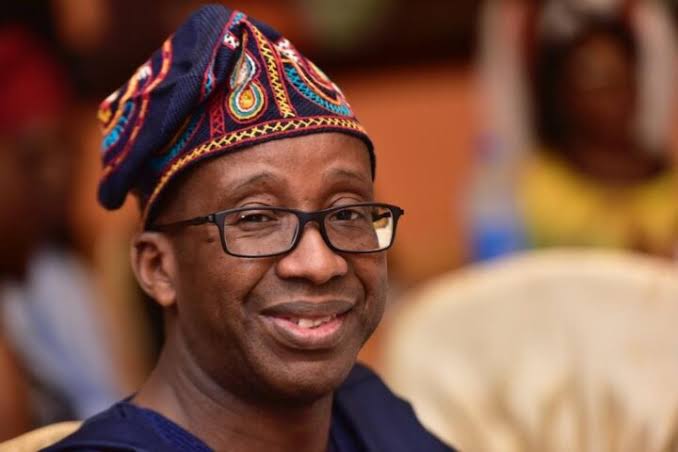
This is where Jimi Adebisi Lawal of the African Democratic Congress (ADC) enters the conversation.
In a political environment where volume is sometimes mistaken for vision, aggression for strength and proximity to powerful patrons for competence, Lawal’s supporters present him as a different proposition: a comparatively low-key figure who could offer an alternative to familiar politics of confrontation.
If his public persona reflects a preference for deliberation over theatrics, perhaps Ogun State deserves to examine his candidacy on its merits.
Leadership is not a singing competition in which the loudest contestant automatically wins the trophy. Neither is governance a wrestling match where the candidate who throws the most punches is declared the people’s champion.
Sometimes, the person who speaks less may have more to say. Sometimes, the quietest man in the room is the one who has actually read the agenda.
And sometimes, when the political marketplace is full of traders shouting over one another, the customer begins looking for a shopkeeper who can explain the quality of his goods without abusing the competition.
That is the opening Lawal’s supporters believe exists.
They argue that he could appeal beyond entrenched party loyalties, engage competing interests and offer voters an alternative to the familiar contest of political supremacy.
A quiet governor who delivers is preferable to a noisy governor who disappoints. But Ogun people must demand evidence of a credible programme, not merely an appealing contrast in personality.
Just when Ogun’s political chessboard appeared crowded with familiar heavyweights, a development involving the Independent National Electoral Commission (INEC) added a fresh twist to the 2027 gubernatorial drama.
Reports published between October 10 and 13, 2026, stated that Jimi Lawal of the ADC appeared on INEC’s published list of Ogun State governorship candidates, alongside the APC’s Solomon Olamilekan Adeola, popularly known as Yayi. Ladi Adebutu and his running mate were absent from the published list. INEC’s list included 13 governorship tickets for Ogun State.
The development has raised serious questions about the PDP’s position in the race. INEC subsequently explained that certain omissions followed non-compliance with statutory requirements concerning the submission of party membership registers. Its position was linked to a Supreme Court judgment on the applicable provisions of the Electoral. Act 2026.
The Ogun PDP, however, disputed the narrative surrounding Adebutu’s omission, insisting that he was its duly nominated candidate and describing reports about his exclusion as misleading. That response is an important part of the story, and the party’s position should not be erased from the public record.
In other words, the political calculator has developed a fascinating problem: one candidate’s name appears on the list, another’s is missing, and the political camps are interpreting the figures from very different angles.
But let us not mistake a developing electoral dispute for a declaration of victory. Inclusion on a candidate list does not confer a gubernatorial mandate, establish superior competence or guarantee success at the polls. Nor does an omission, by itself, settle every subsequent legal or administrative question.
For the ADC and Lawal, inclusion on the published list is a significant procedural development. It provides a basis for discussing his candidacy in the context of the published field, but it does not relieve him of the obligation to convince voters that he has the policies, character and team required to govern.
For the PDP, the omission raises a serious challenge that requires a response through the appropriate legal and electoral procedures.
For the APC, the inclusion of its candidate is no exemption from scrutiny over its record, manifesto and plans for Ogun State.
And for the electorate, the question remains the same: who has a workable plan for our roads, schools, hospitals, jobs, security and public finances?
Perhaps the calculator does not need to be thrown away. Perhaps it simply needs a new battery, a careful operator and somebody who understands the difference between political arithmetic and public accountability. And the new battery is Jimi Lawal.
After all, adding influential names together does not automatically produce good governance. Multiplying campaign promises does not guarantee employment. And dividing political opponents into enemies and friends does not repair a single pothole.
The final arithmetic belongs to the voters.
The two dominant political camps may possess formidable structures, familiar political names and extensive networks of influence. Yet size alone cannot guarantee public confidence, just as an expensive wrapper cannot transform an empty basket into a feast.
The question confronting every major party is whether its internal processes and eventual candidate can inspire confidence among voters who want more than slogans and political arithmetic.
If disputes surrounding candidate selection remain unresolved, the parties risk carrying their internal quarrels into the general election. If prominent figures devote more energy to settling scores than explaining their plans, they may discover that the electorate has quietly begun looking elsewhere.
This is where the ADC and Jimi Lawal have an opportunity to present a credible alternative, but not a blank cheque.
An alternative becomes credible only when it demonstrates that it is genuinely different. It must offer a coherent manifesto, a practical economic programme, a transparent approach to public finances, a clear plan for youth employment, credible security policies and a government that will not confuse public resources with private inheritance.
The ADC must also demonstrate that it is building a broad-based political platform rather than simply waiting to harvest the frustrations of its rivals.
It is not enough to declare that the old order has failed. The alternative must explain precisely how it intends to do better.
Changing the label on a bottle does not necessarily change what is inside.
According to a source described to Ikokore Reporter as a respected political leader in Ogun State, there are concerns that the 2027 contest could become exceptionally turbulent if rivalries intensify and unresolved disputes surrounding nomination processes continue.
The source expressed concern about the possibility of escalating political hostility and argued that the state should avoid becoming a theatre of intimidation or violence.
“We foresee a very turbulent election, perhaps one of the most contentious Ogun State has experienced. We do not want our state to become another theatre of horror and violence. The leading parties are preparing for a fierce contest, and some issues arising from their primary elections still need to be resolved. It is therefore wise to consider a broadly acceptable alternative who can calm frayed political nerves and command support across the state’s different communities,” the source said in substance.
The source further argued that a candidate capable of attracting support among Yewa, Ijebu, Egba and Remo interests could help broaden the political conversation beyond entrenched camps.
These concerns are the source’s assessment, not proof that violence is inevitable. Nevertheless, they raise an important question: should Ogun State wait until political tensions become dangerous before taking reconciliation, inclusion and peaceful competition seriously?
The state has too much at stake to gamble with its stability.
No gubernatorial ambition, however grandly packaged, is worth the blood of a single citizen.
Against this background of political uncertainty, the source said Lawal’s candidacy had entered the discussion as a possible rallying point for a wider coalition of interests.
The suggestion is that a broad-based structure could be assembled around him, bringing together people of different political persuasions who are willing to support a credible programme for moving Ogun State forward.
Such an arrangement, if pursued transparently, could offer a route to consensus-building. But it must not become another secret bargain among political barons who would merely replace one circle of privileged insiders with another.
A genuine coalition must be built around policies, competence, accountability and a clear commitment to public service—not merely around the convenience of defeating a common opponent.
The proposed appeal to Yewa, Ijebu, Egba and Remo communities must also be handled with sensitivity. No candidate should assume that an entire community can be delivered like a parcel because a few prominent individuals have endorsed him.
Every community contains different interests, opinions and political loyalties. Respecting that diversity is part of the democratic process.
Lawal’s task is to demonstrate that he can unite without patronising, negotiate without surrendering the public interest and lead without becoming captive to the very godfather politics his supporters say they want to move beyond.
If Lawal can present a sound programme which he has already planned, build a credible team and convince voters that his candidacy is about service rather than revenge, he can make a substantive case for support.
Let us be clear: political rubbish is not a permanent label attached to a person simply because he belongs to a rival party. It is a satirical description of political habits that have outlived their usefulness—imposition masquerading as consensus, propaganda masquerading as policy, personal ambition masquerading as public service and loyalty to powerful individuals masquerading as loyalty to the people.
If Ogun State is to say a sweet goodbye to these habits, it must do so through democratic participation, evidence-based scrutiny and the ballot box.
The people should not be asked to choose between familiar political camps merely because those camps have deep pockets, loud megaphones or long lists of influential patrons.
Nor should they embrace a third option simply because it is new or because its supporters have mastered the art of ridiculing their competitors.
The real question is whether Jimi Lawal and the ADC can convert their promise of an alternative into a demonstrable programme of competent, inclusive and accountable government.
That is the difference between a political revolution and a political publicity stunt.
One changes the direction of governance. The other changes only the faces on campaign posters.
THE FINAL VERDICT BELONGS TO THE PEOPLE
As 2027 approaches, Ogun State faces a contest that should be bigger than the personal fortunes of individual politicians.
The state needs a contest of ideas, not a carnival of insults; a debate about development, not a parade of political egos; and a government that understands that public office is a trust, not an opportunity to recover campaign expenses with interest.
Jimi Lawal has an opportunity to make his case as the ADC’s candidate. His supporters believe that his temperament and potential for coalition-building offer a contrast to the political atmosphere surrounding the leading camps.
But the burden of proof rests with him.
He must tell Ogun people what he intends to do, how he intends to do it, who will help him do it and what will prevent his government from becoming another disappointment.
The leading parties, meanwhile, must understand that political dominance is not a hereditary title and that an established structure is no substitute for public confidence.
In a democracy, the electorate can question celebrated political arrangements, reject familiar political habits and demand alternatives grounded in evidence and public service.
So, if this commentary sounds like a farewell party for political rubbish, let the invitation carry one important condition: the rubbish must be identified by its conduct, the alternative must prove its worth, and the final decision must belong to the voters.
For Ogun State deserves more than a change of political packaging. It deserves a change in the quality of governance.
And if Jimi Lawal wants to persuade the people that he can lead that change, the time to demonstrate it is now—not after the victory celebration, when the music has stopped and the bills have arrived.
IKOKORE REPORTER — WATCHING THE POLITICIANS, SPEAKING FOR THE PEOPLE.
About the Author